
Understanding Stereotypies & Their Practical Management
 Wed, 15 April, 2026
 01:00 pm - 03:30 pm
(Your Local Time Zone)
01:00 pm - 03:30 pm
(Your Local Time Zone)


Species
Equine
Contact Hours
2.5 Hours - RACE Approval Pending
Language
English
Discipline
Behaviour
Growth Partners
Europe

Veterinary Partners
Global




North America














Europe













Middle East & Africa

Asia-Pacific


Time: London 6PM / Paris 7PM / New York 1PM / Sydney 3:00AM (+1)
Part of the Clinical Equine Behaviour - Science, Welfare & Behavioural Medicine Online Lecture Series
CONTENT DESCRIPTION
Examples of equine stereotypies include crib-biting, weaving and box-walking all of which are repetitive behavioural sequences that the horse often performs for prolonged periods of time. Although it has been known for some time that stereotypies result from the behavioural restrictions imposed by the domestic environment, more recent research (in other species and in the horse) has identified some of the underlying mechanisms that mediate and manifest these behaviours. This additional information provides further insight in how stereotypies can be managed and prevented, and answers some the perennial questions as to whether these behaviours are inherited or whether they can be learnt from one horse to another.
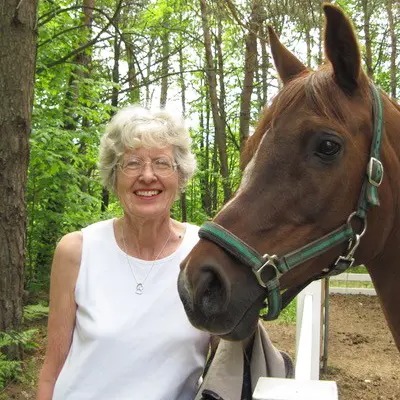


Katherine Houpt, V.M.D, Ph.D., received her veterinary degree and her PhD from the University of Pennsylvania and is board certified by the American College of Veterinary Behaviorists. Dr Houpt specializes in the treatment of behavior problems of animals, primarily dogs, cats, and horses. She directed the Animal Behavior Clinic and taught at the College of Veterinary Medicine, Cornell University, where she is James Law Professor of Behavior Medicine, emeritus.
Dr Houpt is the author with Lee Boyd of Przewalski’s Horse: The History and Biology of an Endangered Species and with Margit H. Zeitler-Feicht of Horse Behaviour Explained: Origins, Treatment, and Prevention of Problems. Dr. Houpt has published a textbook titled Domestic Animal Behavior, now in its fifth edition, as well as numerous scientific articles.
Her current research interests are cribbing and pawing. She has ridden and fallen off horses in more countries than most people have visited, and rides her chestnut Arabian Mare and drives her Swedish Gotland pony.

Dr Sebastian McBride is a Liverpool (BSc.) and Edinburgh (PhD.) graduate who first took up a lectureship position at Aberystwyth in 1996 in what was the Institute of Rural Sciences. He left the Institute in 2005 to extend his research interests in cognitive robotics in the Department of Computer Science (Aberystwyth) and then cognitive neuroscience at the University of Cambridge. He has returned to Aberystwyth University in 2016 to take up an appointment as lecturer in Biosciences.
Dr Sebastian McBride is involved in a number of research projects based around cognition and the neurophysiological control of behaviour. In particular, he is currently working on: animal cognition markers of human neurodegenerative disease, neurophysiological mechanisms underpinning repetitive behavioural disorders and cognitive enrichment in farm and captive animal species.
Qualified Vet
Webinar
USD 180.00
Intern/Resident/PhD (Requires proof of status)
Webinar
USD 135.00
Vet Nurse/Vet Tech (Requires proof of status)
Webinar
USD 135.00
Physiotherapist / Physical Therapist
Webinar
USD 135.00
Farrier
Webinar
USD 135.00
Non-veterinary Attendee
Webinar
USD 135.00
Veterinary Student (Requires proof of status)
Webinar
USD 35.00
If the options you are looking for are unavailable, please contact us.
No tax will be added unless you are a UK taxpayer
Choose currency at checkout